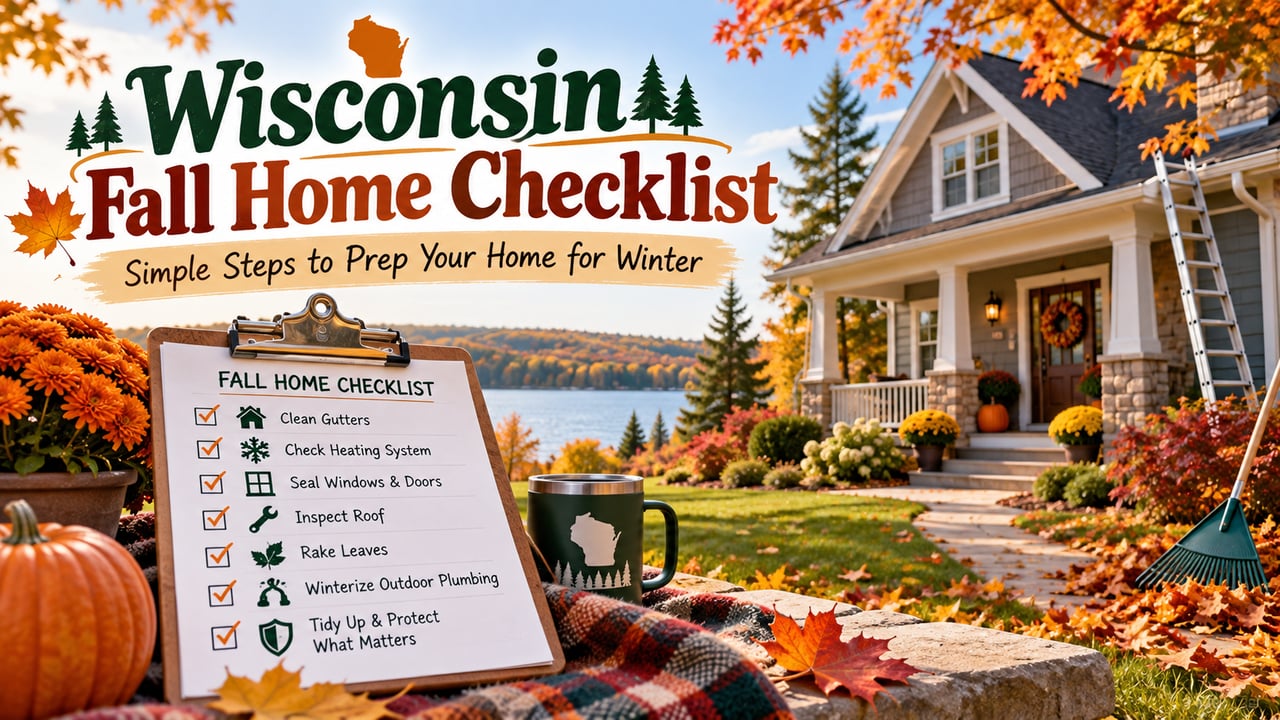
Wisconsin Fall Home Maintenance Checklist
axen Jamie Berger October 16, 2026
axen Jamie Berger October 16, 2026
If you live in Wisconsin, you already know that fall is less of a season and more of a countdown.
One minute you're enjoying crisp air, colorful leaves and pumpkin everything.
The next minute you're scraping ice off your windshield at 6:30 a.m. wondering why you still live somewhere that hurts your face.
Before winter officially arrives, there are a few things worth doing around your home to help prevent expensive surprises, keep things comfortable, and protect your investment.
Whether you're staying put, buying a home, or thinking about selling this fall or winter, here are a few things to knock out before Wisconsin decides it's January.
Yes, it's everyone's favorite fall activity.
Leaves, pine needles and debris can clog gutters and downspouts, which can lead to water backing up where you really don't want it.
Make sure your downspouts are also directing water away from the foundation.
Future-you will be grateful.
This is one of those tiny jobs that can turn into a very expensive problem if you forget about it.
Disconnect exterior hoses and, where applicable, shut off and drain outdoor water lines before freezing temperatures arrive.
You don't necessarily need to climb onto the roof yourself.
From the ground, look for anything obviously missing, damaged or out of place. If you've had storms or know the roof is getting older, consider having a professional take a closer look.
A small roof issue in October can become a much more interesting problem once snow and ice get involved.
Look for branches hanging over the house, garage or driveway.
Snow and ice can add a surprising amount of weight to tree limbs.
Branches that look harmless now can become much less friendly after the first heavy snowfall.
Check around windows and exterior doors for gaps and worn weatherstripping.
If cold air is coming in, warm air is heading out — along with some of your heating dollars.
A little caulk or new weatherstripping can make a noticeable difference.
If you haven't already, schedule your furnace service and replace the filter.
It's much nicer to discover a furnace problem on a 50-degree October afternoon than during the first night the temperature drops below zero.
Your HVAC company will probably appreciate that timing too.
Turn the heat on before you actually need it.
Make sure the thermostat is working correctly and that warm air is reaching the rooms it should.
Waiting until the house is freezing is generally not the ideal troubleshooting strategy.
Fall is a great time to test your smoke detectors and carbon monoxide detectors and replace batteries as needed.
As homes get closed up for winter and heating systems start running regularly, this is especially important.
Check for moisture, leaks, signs of pests or anything else that seems unusual.
Little problems are generally easier — and cheaper — to address before snow covers the ground.
You probably know where it is.
Probably.
But if a pipe ever freezes or bursts, that's not the moment you want to start searching.
Take 30 seconds and make sure everyone who needs to know can locate it.
Lint buildup isn't just inefficient — it can also create a fire hazard.
Clean the dryer vent and make sure the exterior vent is clear.
Bonus: your dryer may actually work better afterward.
Many ceiling fans have a reverse setting.
In winter, running the fan clockwise on a low speed can help move warm air that collects near the ceiling back down into the room.
It's a small thing, but we'll take every bit of warmth we can get in February.
Before the first snowstorm, find the:
Snow shovels.
Ice melt.
Snowblower.
Gloves.
Boots.
Extension cords.
Whatever else you usually discover buried behind the lawn chairs after six inches of snow has already fallen.
And if you own a snowblower, start it now.
Your driveway is not the place to learn in January that it hasn't started since last winter.
Winter sellers have a few extra things to think about.
Keep walkways, driveways and steps clear of snow and ice.
Make sure exterior lighting is working because buyers may be arriving after dark.
Keep the entryway tidy so wet boots aren't the first thing buyers notice.
And don't underestimate the power of a warm, well-lit home when it's cold outside.
There's something pretty inviting about walking into a cozy house when it's 20 degrees outside.
If you're thinking about selling, you don't need to wait for spring automatically. Depending on your home, price range and local market, a fall or winter listing can still make a lot of sense.
Owning a home in Wisconsin means accepting that winter is coming whether we've emotionally prepared for it or not.
Doing a little preventative work now can help protect your home, lower the chance of midwinter surprises, and keep things running smoothly until we finally see grass again.
And if buying or selling a home is part of your plans this fall or winter, we'd be happy to help you figure out the next step.
Stay warm, Wisconsin.
And seriously — go find the snow shovel.
Jon & Jamie Berger
Under One Roof Real Estate & Insurance
Copy and paste this URL into your search bar: https://canva.link/fall-home-checklist
Stay up to date on the latest real estate trends.

axen
Just Someone’s Corner of It

real estate
What You Should Know

axen
What Home Buyers Should Know Before Making an Offer

axen
Be Prepared
axen
Prepare Your Home for Winte

axen
What Homeowners Should Understand

cape coral
A Relocation Guide From People Who Actually Did It

insurance
Why We Made the Move to Southwest Florida